
Utah National Guard Project Area
Camp Williams — Utah County
Building the infrastructure that sustains Utah’s citizen soldiers.
-
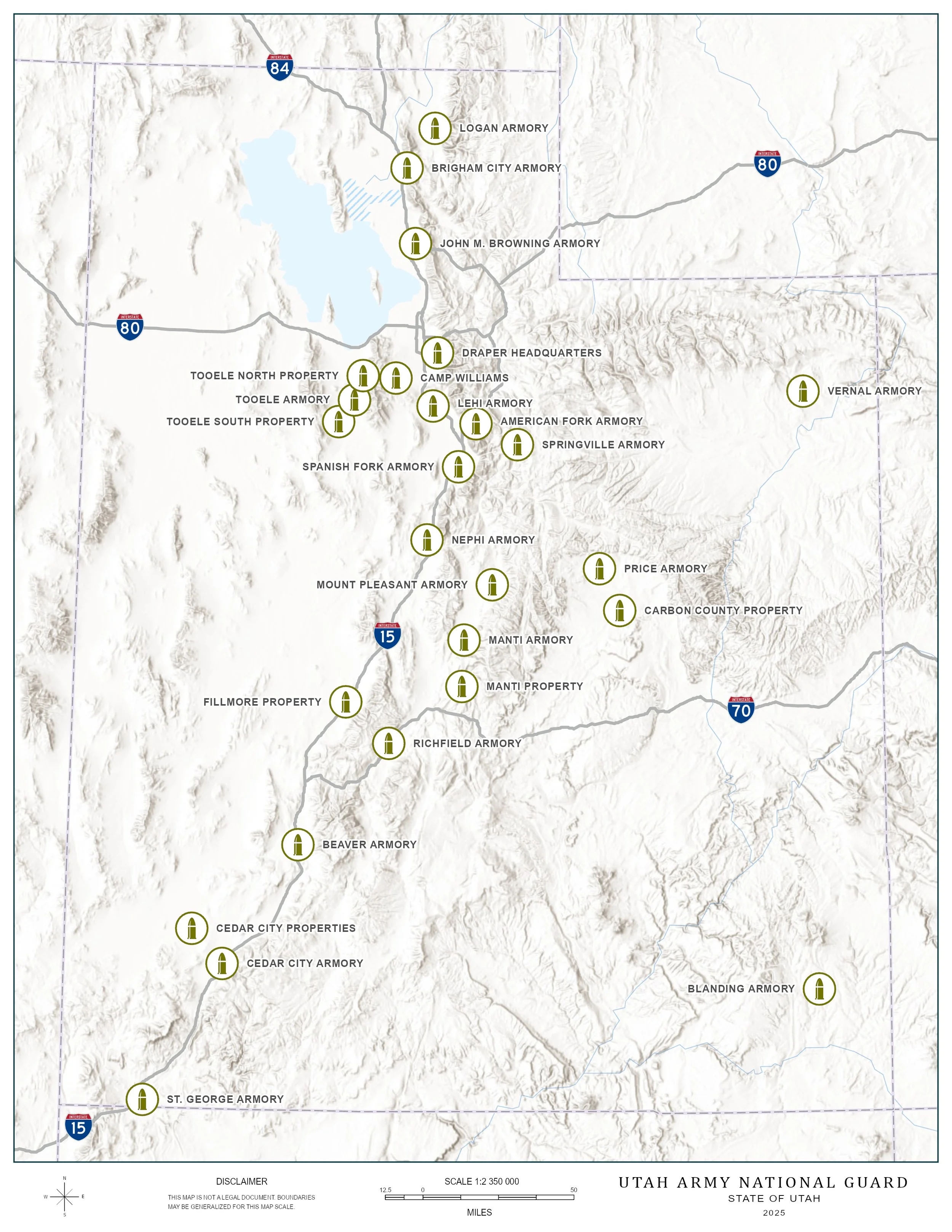
Established in 2024, the Utah National Guard Project Area unites 27 Guard-controlled properties under a comprehensive plan to modernize training facilities and essential utilities. Working alongside the Utah State Armory Board, MIDA is advancing long-deferred infrastructure improvements that enhance readiness, safety, and operational capacity. This strategic investment ensures Camp Williams remains a premier training installation—supporting over 7,800 members of the Utah National Guard and strengthening both state and national defense missions.
-
2025–2030: Initiate Opportunities for the National Guard Project Area Development
-
In August of 2024, the MIDA board reviewed and approved the new Utah Army National Guard Project Area. The project area consists of 27 different properties to serve Utah’s Army National Guard with badly-needed infrastructure projects. The majority of the 27 properties are military properties, owned and held in trust by the Utah State Armory Board, and are under the jurisdiction of the Guard. All 27 properties included in the proposed project area plan are tax exempt and have generated $0 annually in tax revenues to date.
The Utah National Guard is enhancing the Beaver Armory with a new project that significantly expands the motor pool area. This addition will increase space for vehicle parking and maintenance, improving efficiency and safety for Guard personnel. The project strengthens the armory’s long-term operational capacity and supports the Guard’s ongoing commitment to readiness and community service. Demolition begins in November and construction will follow. The new motor pool is projected to be complete by the end of the year.
Resources
Below are documents and amendments of the National Guard Project Area adopted by the MIDA Board. Click on the links below to view each version. Links redirect to a PDF document.